
May
1. Introduction to the Samsung Galaxy Note 20 Ultra
The premium mobile phone sector in 2026 is dominated by massive foldable panels, advanced AI features, and processing architectures built on tiny 3nm nodes. However, within the thriving secondhand and refurbished smartphone marketplaces, older iconic flagship models continue to draw massive consumer interest. Standing out as an absolute legend in this space is the magnificent Samsung Galaxy Note 20 Ultra. Originally unveiled in late 2020 as the absolute pinnacle of Samsung’s productivity engineering, this specific model carries historical weight: it represents the final chapter of the iconic standalone Galaxy Note lineup before its design DNA was merged into the Galaxy S Ultra series.
In 2026, the Samsung Galaxy Note 20 Ultra has dropped into an highly attractive mid-range price tier, floating between 5 to 9 million VND depending on its physical condition.
For students, office professionals, and mobile sketch artists, it offers a tempting alternative to modern mid-range plastic phones.
Before we dive deep into its structural aging, battery life, and processing efficiency, let us review the official technical specifications that drive this classic powerhouse device:
Samsung Galaxy Note 20 Ultra Technical Specifications Overview
| Feature | Detailed Specification |
| Display Panel | 6.9-inch Dynamic AMOLED 2X, WQHD+ (1440 x 3088), 120Hz Refresh, 1500 nits |
| Processor Platforms | Qualcomm Snapdragon 865+ (USA/HK) | Samsung Exynos 990 (Global/VN) |
| RAM Configuration | 8GB / 12GB LPDDR5 High-Speed System Memory |
| Internal Storage | 128GB / 256GB / 512GB UFS 3.1 (Supports up to 1TB MicroSD Expansion) |
| Rear Camera Array | Triple Setup: 108MP Main (OIS) + 12MP Periscope (5x Optical) + 12MP Ultra-Wide |
| Front Selfie Optics | 10MP High-Definition Dual Pixel Phase Detection Autofocus Lens |
| Battery & Charging | 4,500mAh Battery | 25W Wired Fast Charge | Fast Wireless Charging 2.0 |
| Build & Resilience | Corning Gorilla Glass Victus Front/Back, Stainless Steel Frame, IP68 |
| Stylus Integration | Built-in S Pen Stylus System featuring an Ultra-Low 9ms Latency Speed |
| Software & OS | Android 13 with One UI 5.1 Architecture (Official Support Ended in late 2025) |
2. Premium Design: A Timeless Masterpiece That Still Feels Like a Flagship
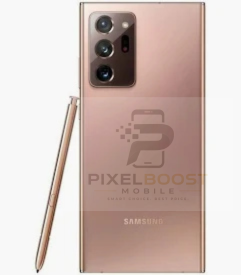
The physical architecture of the Samsung Galaxy Note 20 Ultra sets a very high benchmark for modern executive smartphone luxury. Characterized by its sharp, industrial boxy corners and symmetrical curved glass profiles, the device commands immediate visual attention. The back panel is crafted from premium matte-finished Corning Gorilla Glass Victus, which does a fantastic job of minimizing fingerprint smudges while providing a highly tactile, premium feel in hand.
The structural frame is constructed from rigid stainless steel, giving the phone a substantial, high-quality heft that feels noticeably sturdier than the plastic frames used in modern mid-range devices.
The large, bold rectangular camera housing on the rear panel adds a serious, professional photography look to the smartphone.
Even after years of market evolution, this striking design aesthetic remains indistinguishable from premium flagships released in 2026. Furthermore, full IP68 dust and water protection guarantees long-term durability against sudden downpours.
3. Immersive 6.9-inch Dynamic AMOLED 2X Flagship Screen
Visual output on the Samsung Galaxy Note 20 Ultra is managed by an extraordinary 6.9-inch Dynamic AMOLED 2X curved display panel. Boasting a crisp WQHD+ native resolution (1440 x 3088 pixels), it delivers a highly immersive canvas with jaw-dropping sharpness, vibrant color depth, and true infinite contrast ratios. Interface scrolling and system animations feel incredibly fluid thanks to its built-in 120Hz refresh rate capability.
Outdoor display legibility remains excellent under direct midday sunlight, with the screen reaching a peak brightness of 1,500 nits.
However, prospective buyers must keep in mind a small hardware limitation of this specific display era: the 120Hz refresh rate cannot run simultaneously at full WQHD+ resolution.
To enjoy the smooth fluid motion of 120Hz, the display system must scale down to a standard Full HD+ resolution (1080p), a minor compromise that many users still gladly accept today.
4. The Iconic Integrated S Pen Ecosystem: Unrivaled Productivity
The single most definitive advantage of choosing the Samsung Galaxy Note 20 Ultra over any standard modern smartphone is its legendary integrated S Pen stylus. Cleanly tucked away inside the left edge of the bottom frame, this stylus features an ultra-low 9ms response latency, perfectly simulating the organic feedback of a real ink pen writing smoothly on physical paper.
The S Pen handles a versatile suite of productivity features that are highly valuable to students, journalists, and remote office workers.
Users can execute Screen-Off Memos to instantly jot down quick notes without waking up the phone, use Air Actions gestures for remote camera controls, and perform precise text selections or document signatures.
In a smartphone landscape where separate stylus accessories often cost extra and lack internal charging slots, this built-in hardware ecosystem remains a phenomenal productivity feature.
5. Performance Dynamics in 2026: Snapdragon vs. Exynos Reality
When analyzing processing efficiency in 2026, it is absolutely essential to identify the specific processor variant inside your chosen unit. The USA and Hong Kong variants carry the Qualcomm Snapdragon 865+ processor, which has aged beautifully. Backed by up to 12GB of RAM, the Snapdragon model continues to offer a snappy user experience, running daily applications like TikTok, Facebook, and high-definition multitasking smoothly, while comfortably handling casual sessions of PUBG Mobile or Arena of Valor.
Conversely, the Global and Vietnamese retail variants carry Samsung’s in-house Exynos 990 chipset. In 2026, the Exynos version shows noticeable performance limitations.
It experiences higher internal thermal performance temps during sustained tasks, leading to faster battery drainage and occasional interface stutter during heavy multitasking.
Therefore, tech enthusiasts and power users are highly encouraged to search out the Snapdragon 865+ variants in the used market.
Additionally, the phone retains a rare, beloved flagship feature: a hybrid microSD slot to expand storage up to 1TB.
6. Critical Software and Security Warnings: The End of Life Phase
The absolute biggest drawback to purchasing the Samsung Galaxy Note 20 Ultra in 2026 lies entirely within its outdated software status. The device received its final official operating system upgrade to Android 13 running One UI 5.1, and Samsung officially discontinued all security patch support in late 2025 after a complete 5-year cycle.
Because it will no longer receive security patches to address modern web vulnerabilities, using the phone for highly confidential data carries inherent long-term risks.
Furthermore, as app developers transition to newer platforms like Android 16, certain high-security mobile banking applications and corporate utilities may eventually stop installing on Android 13 altogether over the coming years.
7. Key Advantages and Drawbacks of the Galaxy Note 20 Ultra
To help you make an objective, balanced purchasing decision, here is a breakdown of the primary pros and cons of this former superstar flagship:
Pros and Cons Comparison
| Key Advantages (Pros) | Drawbacks to Consider (Cons) |
| Gorgeous, ultra-premium glass and stainless steel steel body structure | Discontinued Software: No more OS updates or security security patches |
| Phenomenal 6.9-inch 120Hz Dynamic AMOLED display with 1500 nits | Battery Limitations: 4,500mAh cell struggles, especially on Exynos variants |
| Native, ultra-low 9ms latency S Pen stylus integration for high productivity | Thermal Throttling: Exynos models run warm under heavy processor workloads |
| Powerful 108MP main camera setup supporting 5x high-clarity optical zoom | Resolution Trade-off: Cannot run 120Hz fluidity simultaneously at full WQHD+ |
| Rare flagship feature: Supports up to 1TB expandable storage via MicroSD | No Galaxy AI: Totally lacks modern local machine learning AI features |
8. Final Verdict: Is the Samsung Galaxy Note 20 Ultra Worth It in 2026?
The Samsung Galaxy Note 20 Ultra remains an absolute marvel of mobile industrial design, easily maintaining its luxury flagship identity six years after its initial debut. For a highly attractive secondhand price point operating between 5 to 9 million VND, it delivers an incredible display, professional-grade 108MP camera assets, and an elite S Pen experience that modern mid-range devices simply cannot match.
If you are a student or office worker looking for a premium, low-cost productivity tool with expandable storage, and you don’t mind the absence of software updates, this phone is an absolute steal.
However, if your daily activities demand top-tier gaming frame rates, long-lasting battery capacity, and strict data security updates for financial accounts, you should pass on this aging legend and invest in a modern mid-range option like the OPPO Reno series instead.
